You know that moment when you finish speaking and realize the room didn’t quite get what you were saying?
Or worse you watch a recording of yourself and cringe at every “um” and “uh”?
That’s actually a good thing. It means you’re paying attention.
Understanding how you speak is one of the most underrated communication skills out there. And the simplest way to start? Just hit record.
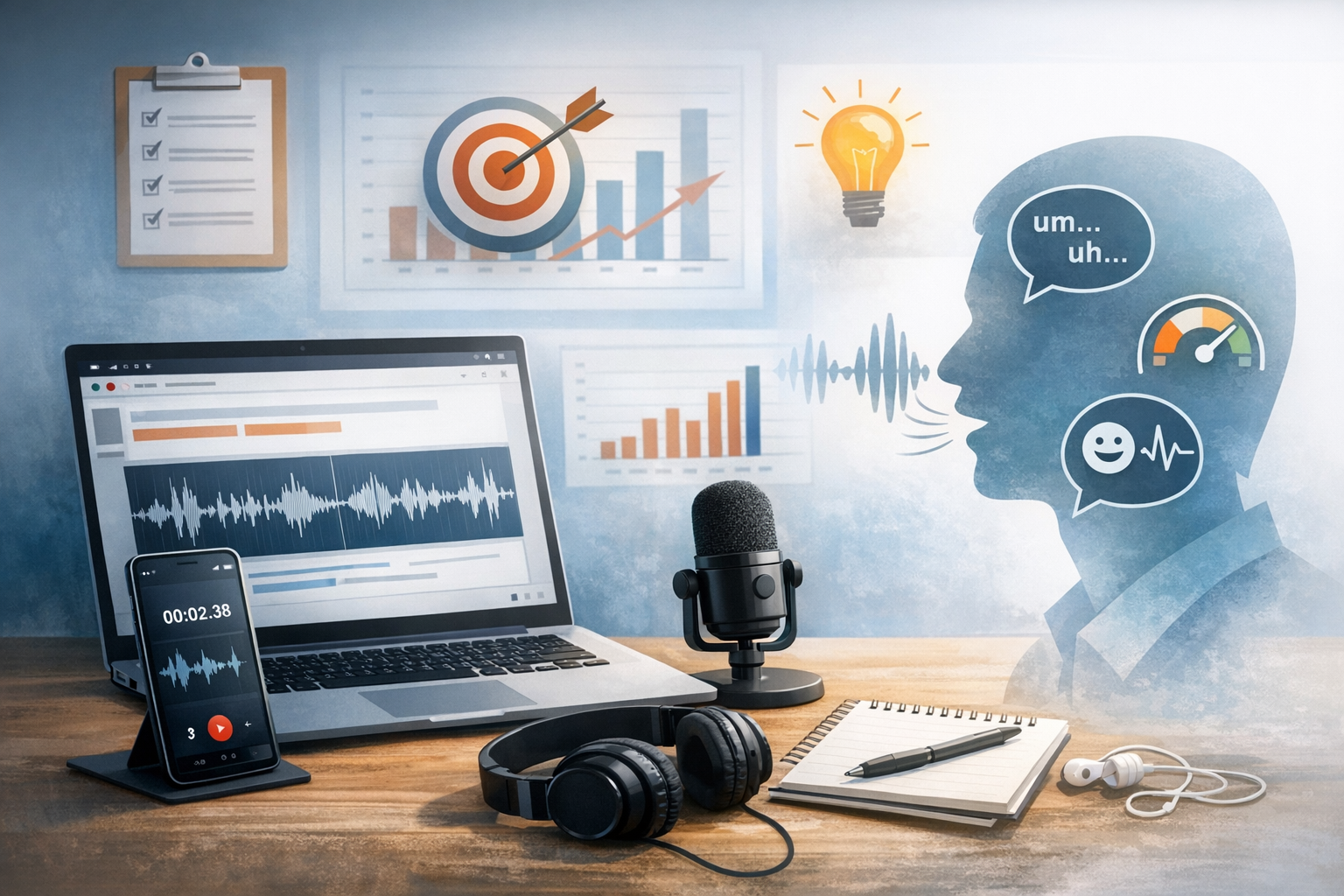
When you listen back to your own speech, you catch things you’d never notice in the moment the filler words, the rushed sentences, the flat tone when you’re trying to sound enthusiastic.
This kind of self-awareness does two things. First, it helps you speak more clearly. Second, it makes life easier for your listeners, because fewer misunderstandings mean better conversations at work, at home, everywhere.
How to Effectively Record Your Speech
Getting the right gear makes all the difference when it comes to recording your speech. Your smartphone can do the trick if you’re just starting out, but investing in a decent microphone or a dedicated recording app isn’t a bad idea if you want to up your game. After all, the clearer the sound, the better you can analyze it later.
Ready to hit record? Start by setting up a recording session in a quiet spot. This is key to avoiding those pesky background noises that can totally throw you off. A desk at home or a space at the library might become your new go-to recording studio. Just make sure the environment is free from distractions so you can focus on your voice and message.
When you’re in recording mode, consistency is your best friend. Regularly taping your speeches or conversations helps track your progress over time. It’s kind of like checking your growth after you planted a seed. You get to watch it sprout into something meaningful as you improve.
Bouncing back after hearing your own voice can feel odd at first, but stick with it. Consistent practice not only familiarizes you with using the equipment but also makes the whole process feel less daunting.
Daily Practice Routine For Public Speaking – A Step-by-Step Guide
Analyzing Your Speech: Tools, Techniques, and Strategies
Once you’ve recorded your speech, the next step is the most crucial analysis. This is where the magic of transformation happens. When you listen back intentionally, you’re not just hearing your voice—you’re uncovering patterns, blind spots, and areas for growth.
Let’s break it down.
🎯 Step 1: Identify Common Weaknesses
Start by listening to a small portion of your recording (1–2 minutes) and watch for these common issues:
🗣️ Filler Words
- Words like “um,” “uh,” “like,” “you know,” “basically,” “so” often sneak in when your brain is catching up.
- While natural in casual conversation, excessive filler words make you sound unprepared or unsure.
Strategy: Pause instead. Silence is more powerful than a cluttered sentence.
🚀 Pacing
- Are you speaking too fast, leaving your audience breathless? Or too slow, causing disengagement?
- Optimal speaking pace is around 130–160 words per minute (wpm).
Strategy: Practice with a script and time yourself. Use tools like Speechnotes or Speech Pace Calculator to measure wpm.
📉 Intonation and Expression
- Does your voice sound flat or robotic? That’s a sign of low vocal variety.
- Great speakers emphasize key words, change pitch to show emotion, and pause strategically.
Strategy: Mark emotional points in your script and rehearse with exaggerated expression at first.
🤐 Clarity and Articulation
- Do you slur words together or skip consonants?
- Regional accents are fine, but clarity is non-negotiable if you want to be understood.
Strategy: Practice tongue twisters like:
“She sells seashells by the seashore”
“Red lorry, yellow lorry”
🤷 Message Cohesion
- Is your speech logical, or are you jumping between unrelated points?
- Do you use transitions (like “Next,” “For example,” “Let’s wrap up”)?
Strategy: Outline before speaking. Make sure every point builds toward a clear message.

🛠️ Step 2: Use Smart Tools to Help
Here are some speech analysis tools that go beyond recording:
Tool Features Ideal For Orai AI feedback on filler words, energy, clarity, pace, and tone Beginners to professionals Ummo Counts filler words, tracks pace and clarity On-the-go recording.
Descript Transcribes your speech, allows audio + text editing Content creators, podcasters Speeko Personalized coaching with benchmarks Ongoing improvement Audacity (Free)Manual waveform editing, noise reduction, and equalization DIY audio clean-up Voice Analyst Real-time pitch and volume analysis Actors, voice coaches, speech therapists
🧪 Bonus: Try ChatGPT to summarize your recording or highlight key ideas (if you upload a transcript).
🧠 Step 3: Self-Coaching Techniques
You don’t need a coach to start improving. Here’s how you can self-analyze effectively:
🔁 The Playback Loop
- Record a 2–3 minute speech
- Listen once without pausing
- Listen again and take notes on:
-
- Tone
- Filler words
- Pacing
- Clarity
- Re-record, applying the changes
Repeat this 2–3 times per session. Over time, you’ll naturally reduce bad habits.
AI Tools For Public Speaking And Effective Articulation
📈 Step 4: Set Targeted Goals
Choose 1 or 2 focus areas at a time to improve. Keep it manageable.
Sample Speech Goals:
- “Cut down ‘um’ and ‘uh’ to under 3 per minute”
- “Pause after each key point for 2 seconds”
- “Speak at 140 wpm max during my next practice session”
- “Add vocal variety by stressing one key word per sentence”
Make these goals specific, and reward yourself when you meet them.
🎙️ Step 5: Get Feedback From Others
Sometimes, you’re too close to your own speech to notice key issues.
- Ask a friend or colleague to listen and share honest feedback
- Join online speaking communities (like Toastmasters Online or Reddit’s r/Toastmasters)
- Share a snippet with a mentor or speech coach
- Use platforms like Speechling for professional feedback
👥 Hearing how others perceive your speech gives you powerful insights and new perspectives.
Top Recommended Public Speaking Skills Books on Amazon: Elevate Your Speaking Game!
Wrapping Up: Speech Analysis Is Your Superpower
Analyzing your speech isn’t just about removing filler words or improving tone. It’s about refining your ability to connect, persuade, inspire, and lead.
Whether you’re speaking to one person or a thousand, the better you understand your voice, the more powerful it becomes.
🎤 Your voice is an instrument. The more you tune it, the more impact it creates.
Final Thoughts: It’s More Than Just Speaking Better
This process is about more than correcting mistakes. It’s about transforming how you connect with the world. Recording and analyzing your speech helps you:
- Develop clarity
- Build confidence
- Sharpen leadership presence
- Improve active listening
- And communicate with real impact
Share your thoughts in the comments below. I’d love to hear from you!
If you found this post helpful, don’t forget to share it with a friend who could use a little articulation boost!
Disclosure: If you click on the affiliate links provided in this article and purchase the product, I will receive a small commission from the company of the product. You will not pay anything extra for your purchase. You can read the affiliate disclosure for more information.

10 thoughts on “How To Record And Analyze Your Speech For Improvement”
This is really helpful. Recording yourself is one of those things most people avoid, but it’s probably one of the fastest ways to improve. I’ve done it a few times and it’s definitely eye-opening hearing things you didn’t notice in the moment.
The part about filler words and pacing really stood out. It’s easy to rush when you’re trying to get your point across, and you don’t realize how it sounds until you play it back.
I also like the idea of focusing on just one or two things at a time instead of trying to fix everything at once. That makes it feel a lot more manageable.
Do you find that people improve more by practicing with prepared speeches, or just by recording everyday conversations?
Great breakdown
Great question. Prepared speeches build structure and clarity, while everyday conversations sharpen natural flow and confidence in real-time. In my experience, combining both is where the real progress happens when practice intentionally, then apply it casually.
How To Record And Analyze Your Speech For Improvement is something everyone should read and learn from this article, public speaking has always been extremely difficult for me. I never thought about recording and anallyzing to improve my public speaking before.
Analyzing Your Speech: Tools, Techniques, and Strategies is the complete step-by-step guide to improve your pubic speaking with this technique, I do plan to follow your steps to work on improving my own public speaking.
Jeff
Thanks so much, Jeff! Really glad the idea of recording and analyzing resonated with you!
It may feel uncomfortable at first, but it’s one of the fastest ways to spot patterns and build real confidence over time.
I used to avoid listening to my own recordings, it always felt awkward. But once I started, I noticed so many small things like filler words and pacing. It really helped me become more aware of how I actually sound. Making small changes over time made a big difference in my confidence. Simple habit, but honestly one of the most effective ways to improve.Have you noticed any habits in your own recordings that surprised you?
I was surprised how often I rushed through key points slowing down there made the biggest difference in how clearly I was understood.
I’ve learned that speaking fluently isn’t always the main goal, but it’s making sure the audience actually grasps the message. Oftentimes, I catch myself talking too fast when sharing with colleagues or even while conducting Bible studies at church. And when I look around, I see those ‘question marks’ on people’s faces ????.
Recording and listening back seems like a practical way to slow down and notice where clarity is lost. Do you find that pacing exercises (like timing words per minute) are more effective than simply practicing pauses, or is it best to combine both approaches for better results?
True Celia! clarity always beats speed, and those “question mark” faces are the best feedback ????.
A mix works best use pacing exercises to build awareness, then layer in intentional pauses to make your message land.
As a mom constantly on the go, I love how these tips make self-improvement feel manageable even during a busy day of school runs and errands. I never realized how much “mom voice” or filler words I used until I started recording my practice sessions, and the clarity has really helped me feel more confident in professional settings. It’s so empowering to have such a straightforward roadmap for polishing my speech without needing a private coach!
That shift from seeing confidence as a trait to a skill is so powerful, especially for modeling it to your kids. Love how you’re turning those nerves into a chance to show up with more clarity and confidence!